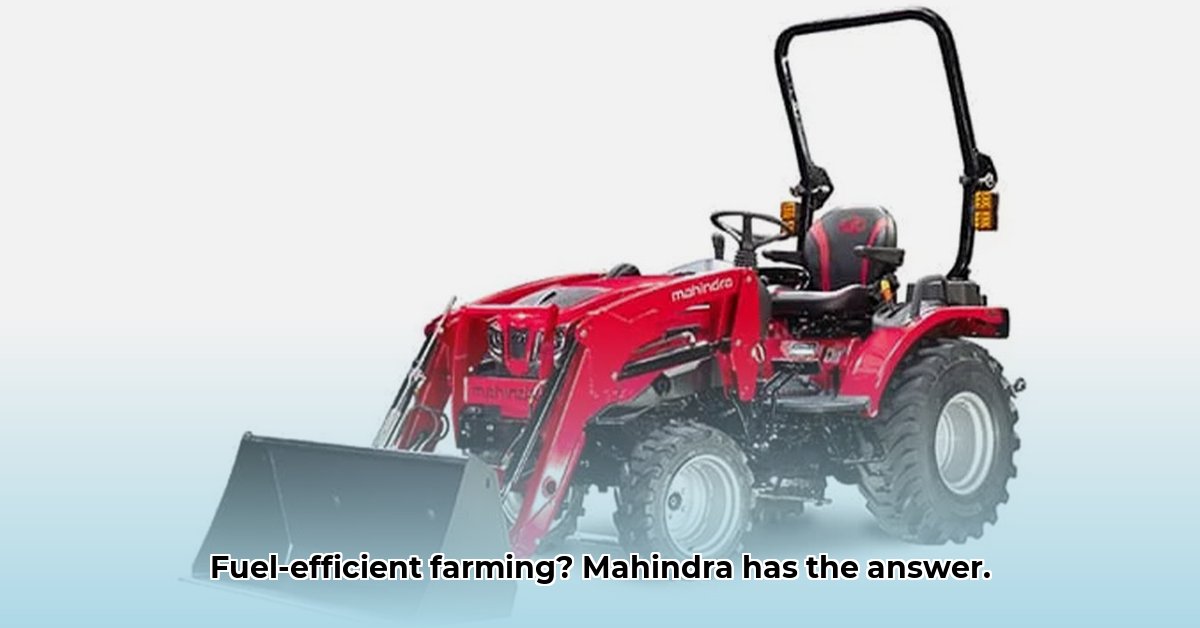
Mahindra Tractor: Fuel Efficiency and Sustainability in Indian Agriculture
Mahindra tractors are a cornerstone of Indian agriculture, renowned for their durability and affordability. But beyond the initial purchase price, their long-term fuel efficiency and environmental impact deserve closer scrutiny. This article explores Mahindra's sustainability journey, examining the available data, highlighting the need for greater transparency, and outlining a path toward a greener future for both Mahindra and Indian farming. How can Mahindra tractors contribute to a more sustainable agricultural landscape? For more information on Mahindra's sub-compact tractors, check out this page.
The Data Deficit: A Need for Transparency
While Mahindra's marketing emphasizes durability, readily available, detailed data on fuel consumption (liters per hectare or gallons per acre) and emissions remains surprisingly scarce. This lack of transparency hinders a complete assessment of their environmental footprint. "Shouldn't farmers have access to this key information before making a significant investment?" asks Dr. Anya Sharma, Agricultural Economist at the Indian Institute of Management Bangalore. This lack of comprehensive information makes it difficult to weigh the long-term cost-effectiveness and environmental impact of Mahindra tractors compared to competitors.
Building a Sustainable Future: A Multi-Stakeholder Approach
Achieving true sustainability requires a collaborative effort involving Mahindra, farmers, and government agencies. A strategic roadmap, focusing on both short-term and long-term goals, is crucial.
Three Pivotal Points for a Sustainable Future:
- Transparent Data Release: Mahindra must publicly release detailed fuel efficiency and emissions data for all models.
- Precision Farming Integration: Mahindra should prioritize integrating precision farming technologies into its tractors to optimize resource use.
- Collaborative Sustainability Initiatives: Government incentives and partnerships with NGOs can support the adoption of fuel-efficient and low-emission farming technologies.
Precision Farming: Optimizing Resource Use
Precision farming technologies, such as GPS-guided systems and variable-rate application, offer significant potential for sustainability. By integrating these technologies with Mahindra tractors, fuel and resource consumption can be drastically reduced. "The potential savings in fuel and other resources, along with the environmental gains, are immense," notes Mr. Rohan Patel, Head of Agricultural Technology at the National Institute of Agricultural Extension Management. However, this requires investment in research, development, and strategic partnerships.
Comparative Fuel Efficiency: The Need for Standardized Testing
Direct comparison of Mahindra's fuel efficiency with competitors is challenging due to a lack of standardized testing procedures. While Mahindra provides internal data on fuel consumption variations within its model range (e.g., the YUVO 575 DI and 245 DI often show higher fuel efficiency than larger models like the 4045 DI and 575 DI), this information alone is insufficient for comprehensive analysis. "Without standardized tests, a fair comparison is impossible," states Mr. Vijay Singh, a leading agricultural machinery expert at the Indian Council of Agricultural Research.
Strategies for Enhancing Fuel Efficiency
Several factors influence fuel efficiency beyond the tractor itself, including terrain, load, and operator skill. To improve fuel economy, Mahindra can focus on:
- Engine Technology Advancements: Invest in research and development to create more fuel-efficient engines. This could involve exploring alternative fuels like biofuels or developing hybrid models.
- Driver Training Programs: Implement comprehensive driver training programs to educate farmers on fuel-efficient driving techniques.
- Targeted Marketing: Highlight the fuel efficiency of specific models to cater to the needs of small-scale and large-scale farmers.
The Path Forward: A Collaborative Effort
The pursuit of sustainable agriculture demands a comprehensive approach. Achieving greater fuel efficiency in Mahindra tractors is not just about improving the bottom line; it’s about environmental stewardship, building a more sustainable future for Indian agriculture, and ensuring the long-term viability of farming communities. This requires a shared commitment from Mahindra, farmers, government agencies, and researchers to foster innovation and transparency within the agricultural sector.